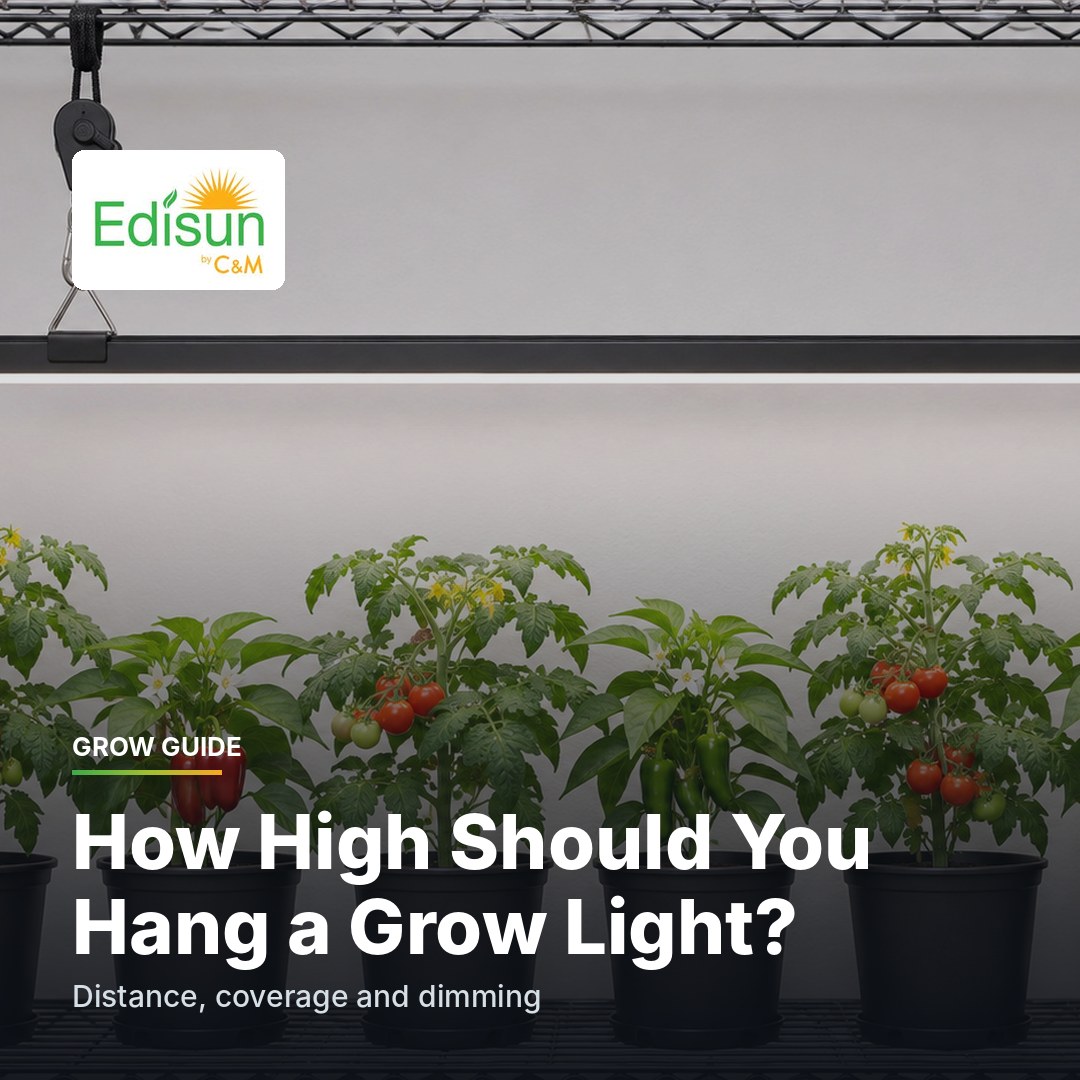
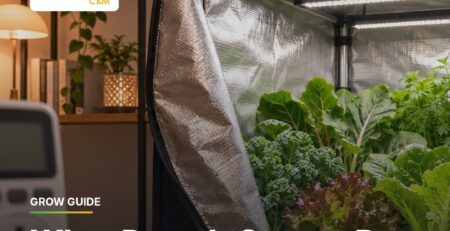
Hang a grow light too low and you can stress the top leaves and leave the edges dim. Hang it too high and plants stretch for light. Here’s how to find the right height, and why with a modern LED you usually set the height once and adjust the light with the dimmer instead.
Start with the minimum on the spec sheet
Every grow light has a minimum distance above the canopy. Closer than that and the light right under the fixture is too intense and too uneven.
Edisun fixture
Minimum above the canopy
LIT-150 / LIT-240
at least 12 in
FXL-320 / FXL-600
at least 12 in
Flare-200 / Flare-600
at least 18 in
The minimum isn’t the target, just the closest you should go. Old advice to keep lights 2–4 inches above seedlings comes from fluorescent tubes, which put out far less light than a modern LED.
What changes when you raise or lower the light
Lower the light and:
intensity (PPFD) at the top of the plants goes up,
the lit area gets smaller, and
the light gets less even: bright in the middle, dimmer at the edges.
Raise the light and:
intensity at the canopy goes down,
the light spreads over a wider area, and
the light gets more even, as the beams from neighboring fixtures overlap.
Edisun fixtures have a 120° beam (LIT and Flare), designed to spread light and blend colors across the canopy. Spacing fixtures so their beams overlap is how commercial lighting plans get even coverage. Michigan State’s Erik Runkle notes that a lighting plan needs the distance between the fixtures and the plants as a starting input, because it shapes the whole layout.
Set the height for coverage, then dim for intensity
With a dimmable LED, height and intensity are separate decisions:
Hang the light high enough to cover your whole growing area evenly, and never below the minimum.
Use the dimmer to set the intensity your crop needs at its stage of growth.
Raise the fixture as the plants grow, to keep the same distance to the top of the canopy.
Every Edisun light dims to 10%, so you don’t have to lower the light for seedlings to get the right intensity. See when to dim your grow light.
Signs the light is too close or too far
Too close (or too bright)
Too far (or too dim)
Bleached, pale or yellowed leaves at the top
Long, thin stems with wide gaps between leaves
Leaves curling up or “tacoing” at the edges
Plants leaning toward the light
Strong growth in the middle, weak at the edges
Pale, slow-growing plants overall
If you see either, check the distance first, then adjust the dimmer.
Measuring instead of guessing
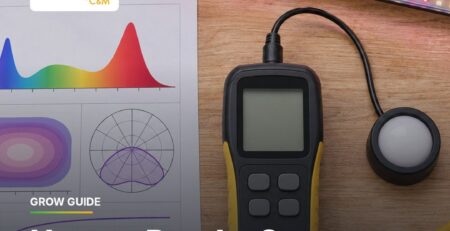
The most reliable way to set height and dimming is to measure the light at the canopy with a quantum (PAR) sensor. Take readings at the center, edges and corners. The average tells you if you’re on target; the difference between the brightest and dimmest spots tells you if the light is even. See PPF vs. PPFD.
Without a meter, start at the manufacturer’s minimum plus a few inches, dim to about half, and adjust based on how the plants respond.
Special cases
Seedlings and microgreens: keep the minimum height and dim way down instead of moving the light closer. See seed starting and microgreens.
Multi-tier racks: the minimum height sets your shelf spacing. Plan each tier for the fixture’s height plus the minimum clearance plus your tallest crop. The Flare, for example, needs 18 inches plus its 5.6-inch housing. See the rack setup guide.
Greenhouses: supplemental lights usually hang from the trusses well above the crop, where they cast the least shade. See greenhouse supplemental lighting.